
The Voice of Story
The Exclusion Loop: How Systems of Recognition Shape People, Power, and a River
The Exclusion Loop: How Systems of Recognition Shape People, Power, and a River explores a pattern that often goes unseen—how the ways we define belonging quietly shape the outcomes we live with.
The river carries more than water—it carries the accumulated impact of decisions shaped by who is recognized, and who is not.
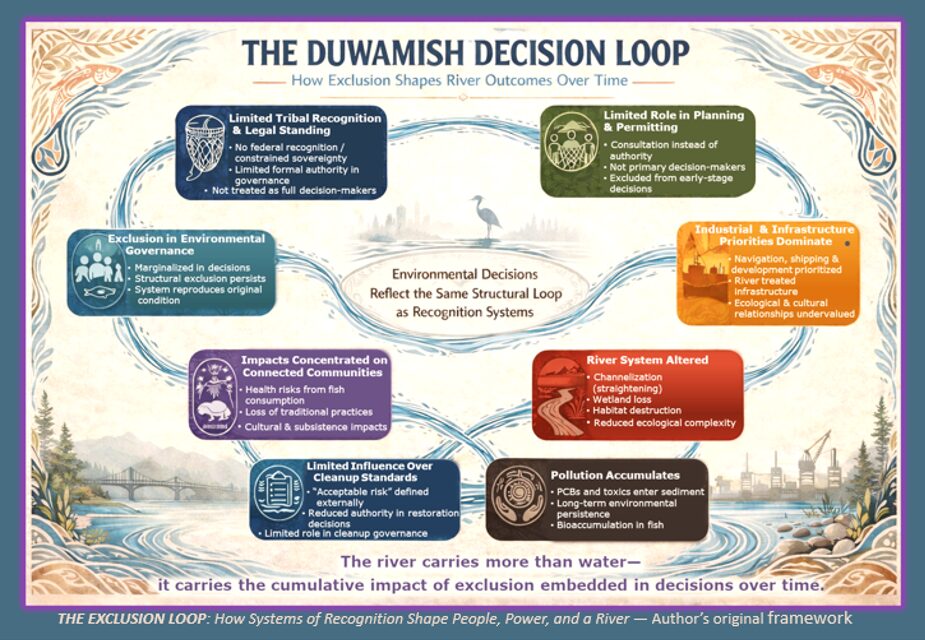
The Exclusion Loop: How Systems of Recognition Shape People, Power, and a River explores a pattern that often goes unseen—how the ways we define belonging quietly shape the outcomes we live with.
Through the story of the Duwamish River, this book traces a shift from relationship-based recognition—where identity was lived, known, and carried through connection—to systems that rely on documentation, classification, and proof. As these systems take hold, they begin to reshape not only who is recognized, but how decisions are made, whose voices carry weight, and what becomes possible.
Over time, these decisions accumulate. They form a loop—one in which exclusion in recognition leads to exclusion in governance, shaping environmental outcomes that, in turn, reinforce the original conditions. The river becomes not just a landscape, but a record of those decisions.
Blending environmental science, lived experience, and systems insight, The Exclusion Loop invites a deeper look at how structures of power operate across both human and ecological systems—and how what remains unseen or unrecorded can still profoundly shape the world around us.
Against the Current: Retaliation, Resilience, and Reform
When I joined NOAA’s Northwest Fisheries Science Center, I believed I was stepping into a life of service—protecting marine ecosystems, advancing science, and contributing to the public good. What I encountered instead was a system under strain, where misconduct was not addressed, and raising concerns carried consequences.
The turning point came when I discovered that a sexually explicit video of me had been created without my consent, digitally altered, and circulated within my workplace. Rather than being treated as a serious violation, the situation was handled in ways that deepened harm and exposed the limits of institutional accountability. When I reported what had occurred, the response was not investigation, but retaliation—affecting my role, my reputation, and ultimately my ability to continue my work.
I turned to the formal systems designed to protect whistleblowers. But as my case moved forward, those systems faltered. A quorum gap at the Merit Systems Protection Board left my appeal, along with many others, unresolved—caught in a process that could not function. Justice was not directly denied, but it became inaccessible.
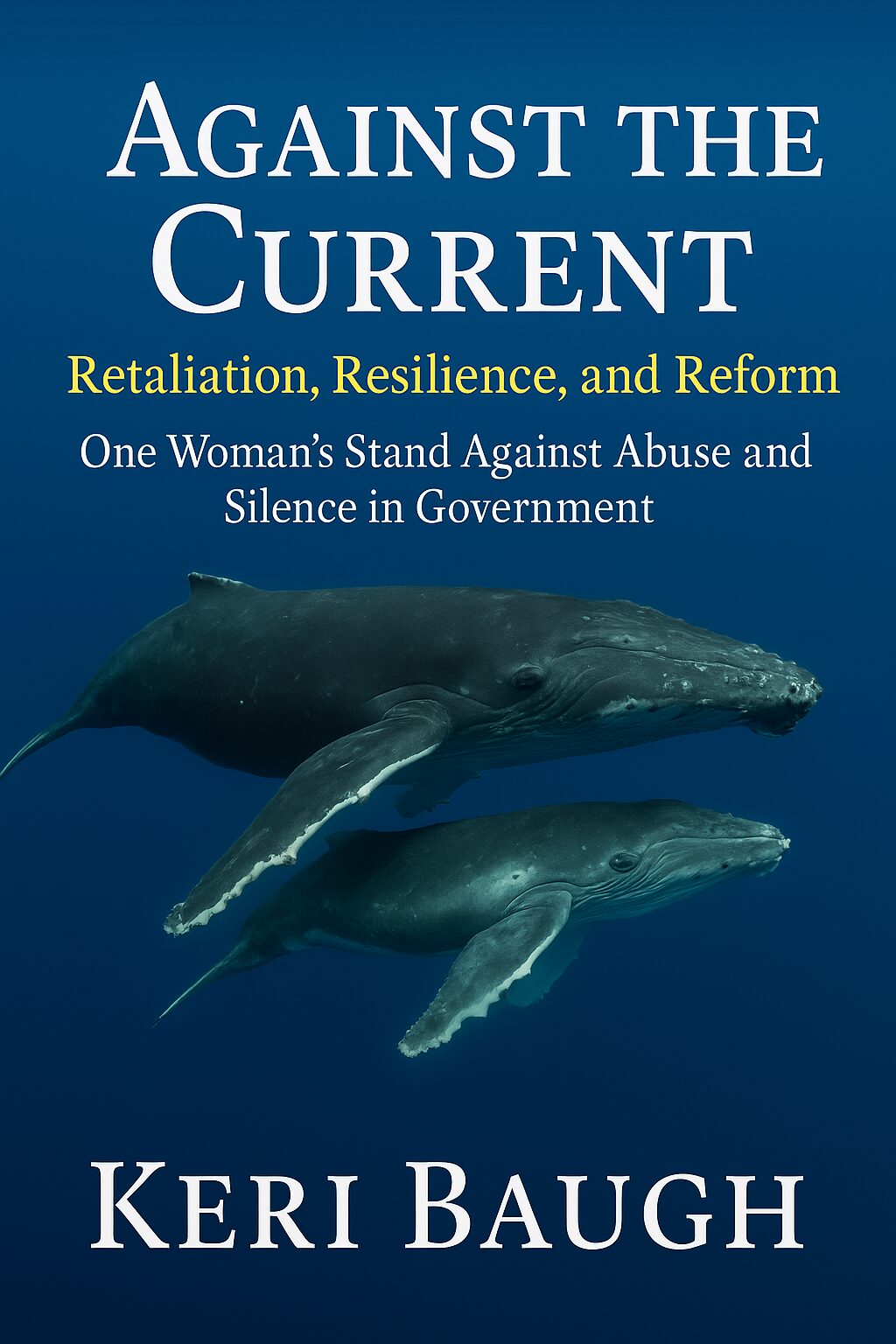
Against the Current: Retaliation, Resilience, and Reform is a personal account of navigating that reality—of documenting what happened, continuing to speak, and confronting systems that struggle to hold power accountable. It is both a story of persistence and a broader reflection on how institutions respond when challenged, and what it takes to create meaningful protection for those who come forward.