
The Signature Vibrations™ Method
Most frameworks evaluate performance under stable conditions.
This method focuses on what remains recognizable, coherent, and trustworthy when conditions change.
The Signature Vibrations™ Method is a cross-domain analytical framework designed to assess how systems form alignment, how that alignment is tested under stress, and what persists over time.
It is intentionally applicable across multiple system types, including:
- Individuals and human development
- Ecological and environmental systems
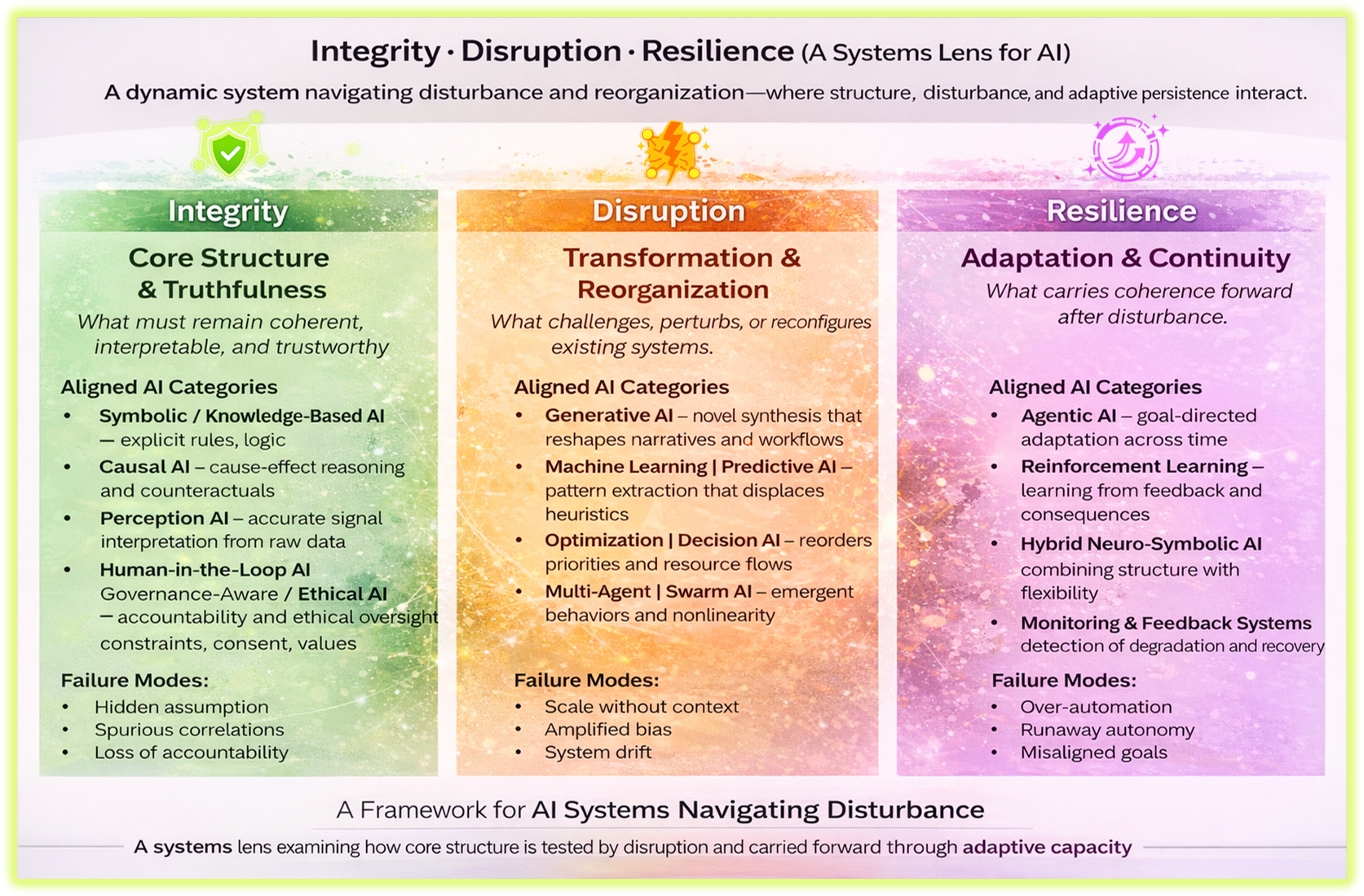
- Data, AI, and socio-technical systems
- Institutions and governance structures
The method distinguishes baseline alignment, stress-tested coherence, and longitudinal signal persistence, allowing comparison across domains without collapsing context.
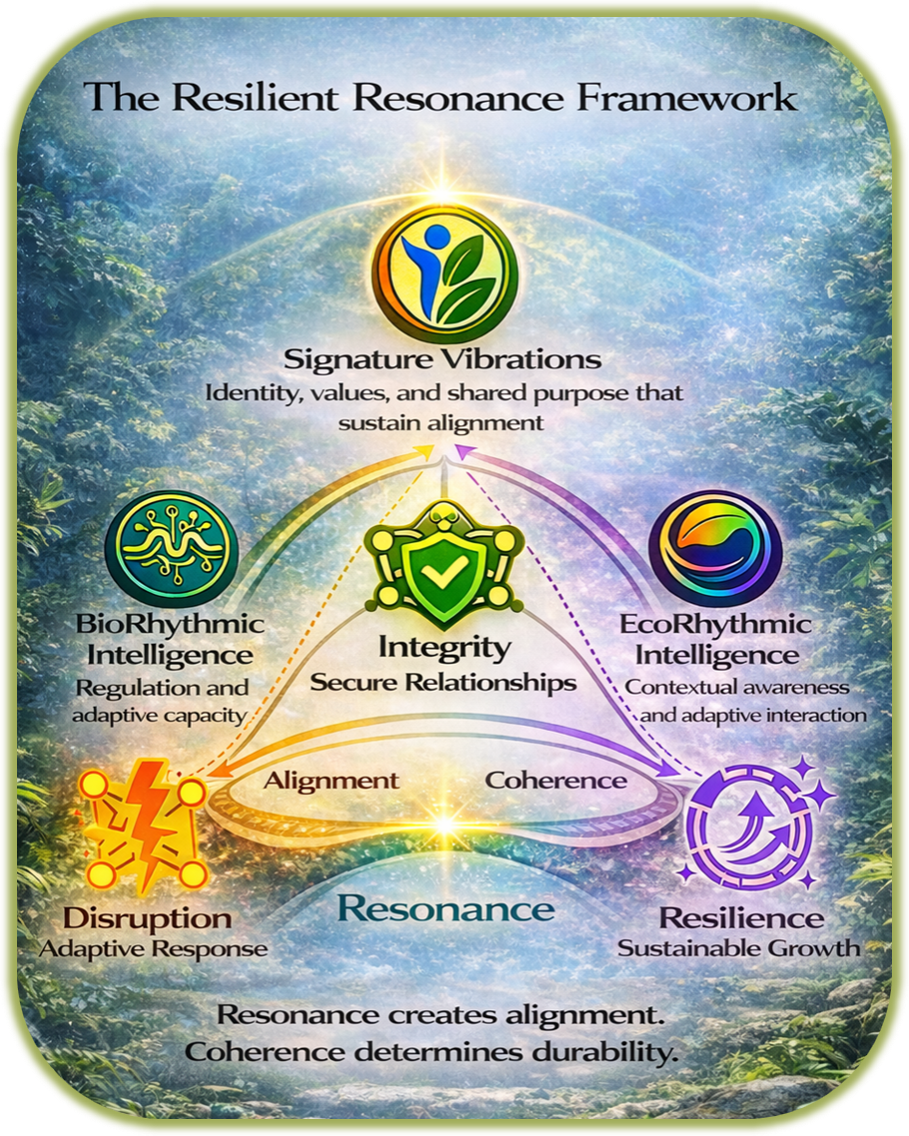
The Alignment Triad: Baseline Coherence
Alignment describes the conditions that exist before significant stress is applied. It reflects how a system is oriented, regulated, and situated within its environment.
Signature Vibrations™
Identity, values, and shared purpose that orient a system and give it recognizable form.
BioRhythmic Intelligence™
Internal regulation, timing, and adaptive capacity that enable responsiveness without fragmentation.
EcoRhythmic Intelligence™
Contextual awareness, relational fit, and attunement to environmental conditions.
Alignment establishes orientation, but alignment alone does not guarantee durability.
The Coherence Triad: Stress-Tested Structure
When systems encounter pressure, coherence becomes observable through how structure responds to disruption.
Integrity
Structural trust, internal consistency, and relational reliability under strain.
Disruption
Diagnostic pressure that reveals system properties; disruption is treated as information, not failure.
Resilience
Adaptive continuity over time, without assuming recovery or success as a given.
Coherence reflects whether a system can adapt without losing its core structure or purpose.
The Resonance Bridge
The Alignment and Coherence Triads are connected by the Resonance Bridge—the interpretive passage where stress-tested coherence becomes observable as signal persistence over time.
Resonance is not assumed.
It is revealed.
This bridge allows alignment and coherence to be evaluated longitudinally, distinguishing temporary performance from durable system behavior.
Research Applications
Because the method is structural rather than domain-specific, it can be applied consistently across:
- Human wellbeing and developmental systems
- Ecological monitoring and stewardship
- AI governance, model drift, and accountability
- Institutional ethics, trust, and decision systems
Resonance creates alignment.
Coherence determines durability.